This video comes from TED.com. Isabel Allende was the niece of Salvador Allende, the president of Chile from 1970-1973. When he was assassinated, Isabel was forced to flee Chile. Today, Isabel Allende is a prominent Latin-American author. She has written many books and short stories. Known for her feminist flare and passion, many of her works have been translated into multiple languages. This video provides a unique opportunity to hear from Isabel herself as she explains the things that have inspired her own works of inspiration.
Isabel Allende tells tales of passion | Video on TED.com
Friday, December 4, 2009

Tuesday, December 1, 2009
The Power of Inspiration
 "For my part I know nothing with any certainty, but the sight of the stars makes me dream."
 ~Van Gogh
Looking around at the world, it seems to me that everyone is inspired in s ome way. Some people are more reserved about the things that inspire them, while others speak out and make clear what it is that drives them to become something great. If you look for it, each person has something that brings a twinkle to their eye and a smile to their lips. When I look at anyone I have ever admired, I find that it is their ability to be inspired that has lead them to where they are now.
 ome way. Some people are more reserved about the things that inspire them, while others speak out and make clear what it is that drives them to become something great. If you look for it, each person has something that brings a twinkle to their eye and a smile to their lips. When I look at anyone I have ever admired, I find that it is their ability to be inspired that has lead them to where they are now.
  No matter what a person does, a certain amount of inspiration is necessary. How can a person succeed when they are not passionate about what they do? Teachers need to have a passion for their students and subjects; cooks need to have a passion for the food and flavors they create; carpenters need to have a passion for building something that will last a lifetime. No person who does much of anything does so without inspiration and passion, and anyone with these key ingredients goes on to inspire passion in others. This leads to greatness.
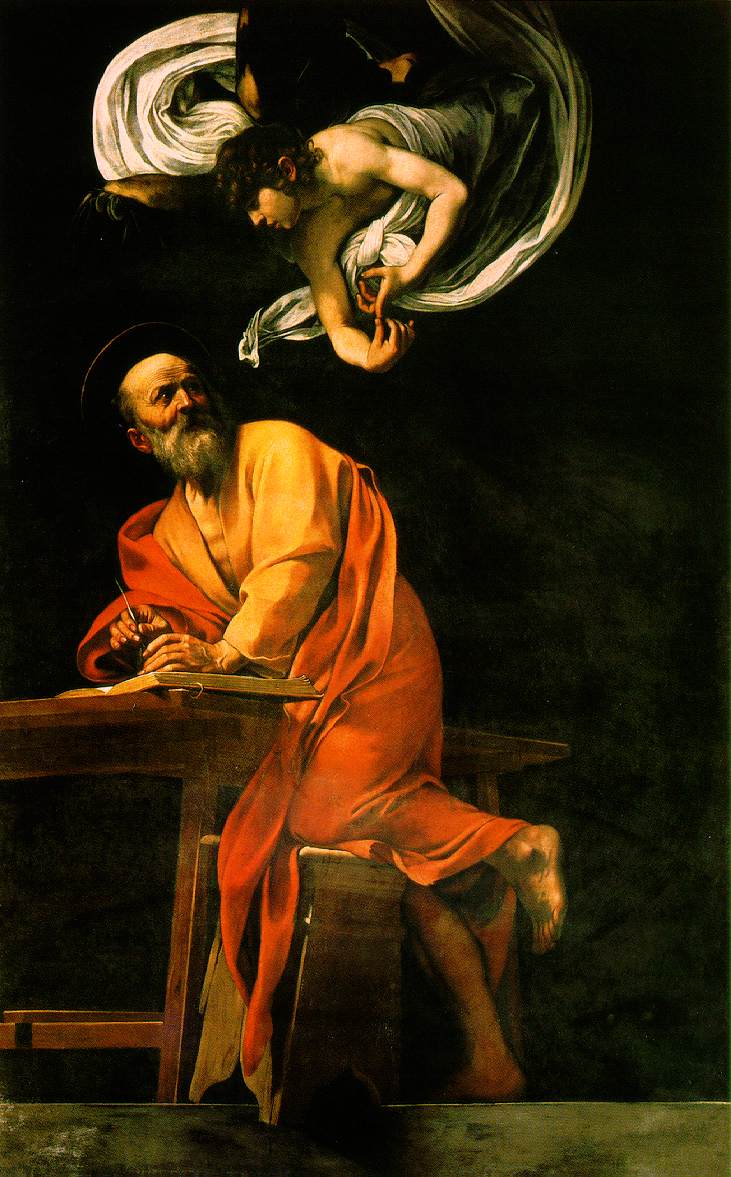 Inspirations give us dreams. What it all comes down to is what makes us dream. There are different poems, songs, and pictures that inspire me. They inspire different thoughts and emotions within me each day. What is important about these is not necessarily what they look or sound like, but rather that they inspire. They inspire masses of people in the same way that a cook, a teacher, and a carpenter are both inspired and inspire in turn. When one person can write, paint, or say something that leads others to feel inspired, one of the greatest abilities of human kind is illustrated. Humans are unique because of their ability to inspire and to be inspired by others. So when you think of the things that inspire you, remember that these things touch your life and lead you to dream and to feel passionate about the things around you. Those inspirations let you dream and those dreams make your life great. In reality, a Van Gogh painting does more than look pretty. It makes us think of things we normally wouldn't. It invites us to stretch our minds. This is the true genius of inspiration.
 Shakespeare's Impact
The following is an excerpt from my senior research paper. My paper is inspired by the work of Shakespeare.
The smell of warm ale and meat is thick in the air. Shrieks of laughter disappear into a flood of faces. Puck wanders about on a proscenium stage before a floor filled with people standing elbow to elbow. Above the mosh pit scene, there is a circular row of seats filled by the middle class. Above this row is yet another row in which the queen herself sits back and enjoys the show. It is a convergence of all levels of society brought together for a brief period of time to experience a play that comments on the class system contained in this very room. It is here that Shakespeare proves himself to be a genius, if for no other reason than for managing to die a natural death rather than being hanged.
Centuries later, high school students trudge to class and are asked to pull out their dry textbooks. They turn to page 259 and begin to read A Midsummer Night’s Dream individually. Just as students’ eyes become heavy with sleep and their heads begin to nod, and a single teacher stands in front of the class (also completely unenthusiastic about the play) and delivers an even drier lecture on Shakespeare. This was my experience in high school English. Comparing these two experiences side by side, one can hardly ignore the distinct change in atmosphere from Elizabethan England to our present day classrooms.
Year after year, generation after generation, students of English are asked to study the works of William Shakespeare. As high schoolers, these students are often curious thinkers and wonder, “why Shakespeare?” As a future teacher, I have only one answer: because Shakespeare is still relevant to our lives today.
The smell of warm ale and meat is thick in the air. Shrieks of laughter disappear into a flood of faces. Puck wanders about on a proscenium stage before a floor filled with people standing elbow to elbow. Above the mosh pit scene, there is a circular row of seats filled by the middle class. Above this row is yet another row in which the queen herself sits back and enjoys the show. It is a convergence of all levels of society brought together for a brief period of time to experience a play that comments on the class system contained in this very room. It is here that Shakespeare proves himself to be a genius, if for no other reason than for managing to die a natural death rather than being hanged.
Centuries later, high school students trudge to class and are asked to pull out their dry textbooks. They turn to page 259 and begin to read A Midsummer Night’s Dream individually. Just as students’ eyes become heavy with sleep and their heads begin to nod, and a single teacher stands in front of the class (also completely unenthusiastic about the play) and delivers an even drier lecture on Shakespeare. This was my experience in high school English. Comparing these two experiences side by side, one can hardly ignore the distinct change in atmosphere from Elizabethan England to our present day classrooms.
Year after year, generation after generation, students of English are asked to study the works of William Shakespeare. As high schoolers, these students are often curious thinkers and wonder, “why Shakespeare?” As a future teacher, I have only one answer: because Shakespeare is still relevant to our lives today.
Subscribe to:
Posts (Atom)


